On Oct. 14, Mayor Kirk Watson announced a deal with the University of Texas. The City would take ownership of Lions Municipal Golf Course, and the 141 acres at 2901 Enfield Road would stay an 18-hole public course. WAYA's campus would go to the youth association, and anonymous donors would fund a gift to the university so taxpayers don't pay for the purchase. That is the headline most of West Austin has been waiting decades to read.
The same agreement also rewrites the rules for roughly 190 acres of university land along Lake Austin Boulevard. That land holds the Lake Austin H-E-B, Mozart's Coffee Roasters, Hula Hut, the LCRA headquarters and the Brackenridge Apartments. For anyone living in Tarrytown, the course now has a clear path forward, pending final approvals. Under the same agreement, the land next to it would be open to new development rules.
What the Course Actually Gets
The protections for Muny itself are clear. Muny opened in 1924 on University-owned land, and the City has run it under lease since 1937. In 1950 it became the first public golf course in the South to integrate, and it is listed on the National Register of Historic Places as a civil rights landmark. According to the City's announcement, it is Austin's most-used public course, with more than 75,000 rounds a year. Community Impact reports that the City pays UT just under $500,000 a year for that lease. It also reports that the 155-acre property holding Muny and WAYA is appraised at more than $680 million.
Under the deal, that lease would turn into ownership. In the Austin American-Statesman, Muny Conservancy co-chair Scotty Sayers described it as donor money going to UT so that Muny stays an 18-hole course in perpetuity. He said UT would plan the remaining land alongside the City. The donors and the amounts they gave have not been disclosed. The deal still needs approval from Austin City Council and UT's Board of Regents.
The Rulebook for the Other 190 Acres
The draft amendments to the 1989 Brackenridge Development Agreement went into the City's commission backup materials. They set the development standards for non-UT projects across 190.26 acres. These are the numbers that set how tall and how dense the area could get:
- Density: The whole area gets a floor-to-area ratio of 0.6 to 1. Setbacks from the river, a tributary and Lake Austin Boulevard shrink the land that can actually be built on, so individual sites can go above 0.6. No site can exceed 5 to 1 unless Council approves an increase through a rezoning.
- Height along and north of the boulevard: Buildings that touch Lake Austin Boulevard, and buildings north of it, top out at 65 feet. The City's standard height-limit exception still applies, and so do compatibility requirements north of the boulevard.
- Height south of the boulevard: Buildings south of Lake Austin Boulevard that don't touch it can reach 105 feet, again subject to the height-limit exception.
- Coverage: Impervious cover across the whole area is capped at 75%. Individual sites can go up to 85%, and impervious cover can be moved between sites.
The 65-foot figure has been widely quoted, but the full draft is more complicated. The summary line says no building can be taller than 65 feet "when measured from LAB." The detailed terms underneath it allow 105 feet on sites south of the boulevard that don't front it. Community Impact also reports a setback of at least 200 feet from Lady Bird Lake. A separate draft schedule lists permitted use categories across residential, commercial, limited industrial, agricultural and civic. It does not assign any use to a specific parcel.
Why "No Plans Yet" Carries So Much Weight
According to Community Impact, the university hasn't decided on any development plans. The Brackenridge Apartments would stay for the near future and could be relocated and rebuilt once redevelopment begins. The draft also commits UT to replacing existing affordable student housing on University property, though not necessarily within the Brackenridge area.
For the land around Muny, that gap matters more than the course does. The tract has come close to dense redevelopment before. A 2009 university proposal would have redeveloped the whole Brackenridge tract, Muny included, as a dense mixed-use community. In 2019, then-state senator Watson sponsored legislation creating the Save Historic Muny District, and lawmakers extended it several times without settling anything. A 2021 City rezoning effort covering Muny and other UT sites stalled with no result.
This time, the rules are being written before any building is designed. The draft calls for a tax increment reinvestment zone that follows the City's TIRZ policy on affordable housing without requiring that housing inside the zone. It also calls for a local government corporation and a regulating plan that mirrors the amended agreement. Community Impact describes the regulating plan as the framework for future residential and retail projects. It describes the tax increment financing as the way to pay for new infrastructure there.
The height, density and coverage limits would be set with this fall's agreement, and what actually gets built within those limits would be decided in the 2027 regulating plan.
The Calendar From Here
As of publication, the schedule runs on two tracks. The amended agreement moves through fall 2026, and the regulating plan follows in 2027.
- Oct. 21, 6 p.m.: The Environmental Commission agenda set a staff briefing for this date, with public comment allowed in person or by phone for up to three minutes. Phone registration was due by noon the day before.
- Oct. 27: Community Impact reports a Planning Commission briefing.
- Nov. 19: The amended agreement goes to City Council.
- Spring 2027: The regulating plan and TIRZ come back through boards, commissions and Council, after more public review.
The City's Brackenridge Tract page has the tract boundary map and the history of the agreement. The Muny Conservancy has asked supporters to contact Council before the Nov. 19 vote and has posted a letter template. KVUE reported that co-chair Ben Crenshaw urged residents to keep speaking up until final approval.
The Same Shoreline Kept Its Water This Fall
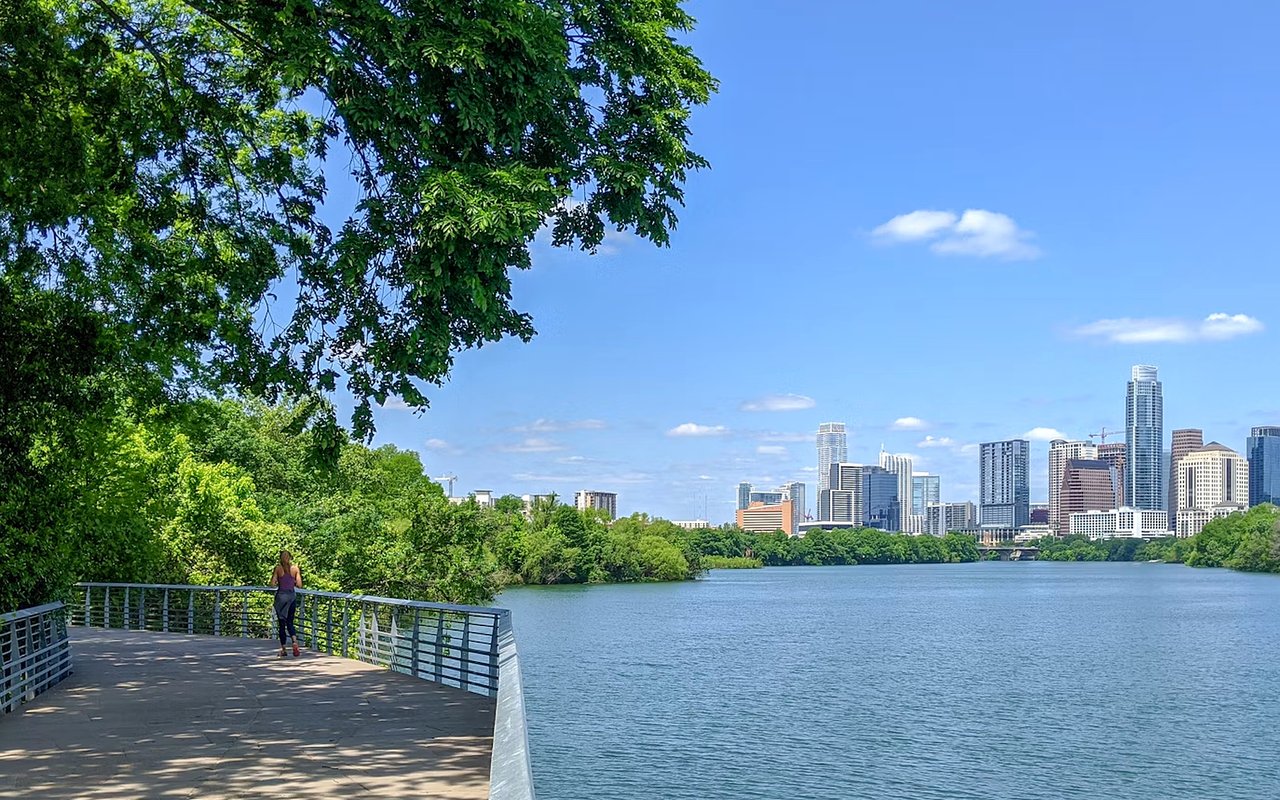
Weeks before the Muny announcement, the City made another call about this stretch of waterfront. On Sept. 24 it canceled the Lake Austin drawdown that had been scheduled for Oct. 12 through Nov. 30. Staff cited the possible effects on businesses and activities along the lake, including fall weddings, UT football games and Formula 1.
The trade-off falls on shoreline property owners. A drawdown is their window for reaching docks, bulkheads and boat slips to do maintenance and clear out sediment. Stakeholders asked for January and February 2027 instead. LCRA has told the City that since Winter Storm Uri in 2021 it no longer does winter drawdowns, so its hydroelectric generators stay available for the Texas grid. The City says it will keep evaluating future drawdowns, but it has not set a new date.
With the drawdown canceled, the water past Hula Hut and Mozart's won't be lowered this fall. Both businesses are on the same Brackenridge tract that the amended rules would cover.
Meanwhile, Booking a Tee Time Works the Same
The course still runs as it always has while all of this moves forward. On the City's GolfATX page for Lions Municipal, weekday tee times open online seven days ahead at 9 a.m. Weekend times open the Monday before at 8 p.m. The page also lists the pro shop, driving range, putting greens, cart rentals and Cisco's Muny Cafe, each with phone numbers. The page doesn't post cafe hours, so call before you go.
If you own near Enfield Road or Lake Austin Boulevard, the next year of Brackenridge decisions will affect how the area around your home is described and valued. The Weiss Group follows these hearings closely, and we're glad to go through what the regulating plan could mean for your street before spring 2027.