By The Weiss Group
Austin's real estate market has long attracted investors drawn to strong appreciation, a growing population, and a city that continues to expand in every direction. But succeeding here requires a sharper strategy than it did five years ago — prices have shifted, buyer expectations have evolved, and competition for the right properties is real. We work with investors across Austin's neighborhoods every day, and the ones who come out ahead are the ones who understand the local market before they commit to a purchase. Whether you're eyeing a dated ranch in Rundberg or a neglected craftsman near Crestview, what you do before you buy matters as much as the renovation itself.
Key Takeaways
-
Why Austin's neighborhoods require different flipping strategies
-
How to evaluate a property's true profit potential before you buy
-
The renovation priorities that move the needle with Austin buyers
-
Common mistakes that erode margins — and how to avoid them
Know Your Austin Neighborhoods Before You Buy
Austin is not a monolithic market — a flip that works in East Austin may not translate the same way in South Austin or near the Domain. Each pocket of the city carries different buyer profiles, price ceilings, and renovation expectations, and buying without that context is one of the fastest ways to leave money on the table.
Neighborhoods That Consistently Attract Flip Buyers
-
East Austin (78702, 78722): High buyer demand, strong appreciation, and buyers who expect contemporary finishes and functional outdoor spaces
-
North Loop and Crestview: Mid-century homes with loyal buyer bases; character and quality matter more than flashy upgrades
-
Rundberg and North Lamar corridors: Lower entry prices with emerging demand — higher risk, but real upside for experienced investors
-
South Congress and Bouldin Creek: Premium price per square foot; renovations need to match the neighborhood's elevated buyer expectations
Run the Numbers Like a Developer, Not a Homeowner
The most common mistake we see from first-time flippers is buying on gut rather than data. In Austin's market, where carrying costs accumulate quickly and contractor timelines can stretch, your margin needs to be built in from the day you sign the contract — not recovered during the sale.
The Core Math Every Flip Needs Before You Commit
-
After Repair Value (ARV): What will the home be worth, fully renovated, in this specific neighborhood at current market conditions?
-
Renovation budget: Get real contractor bids before closing, not rough estimates
-
Carrying costs: Factor in property taxes, insurance, utilities, and financing for the full expected hold period
-
Target margin: Most experienced investors in Austin look for a minimum 15–20% return after all costs before committing
Renovation Priorities That Austin Buyers Actually Pay For
Not every upgrade translates to a higher sale price. In Austin's market, buyers are discerning — they'll notice a beautiful kitchen, but they'll also notice deferred maintenance or a poorly executed bathroom that feels done on the cheap.
Where to Put Your Renovation Dollars
-
Kitchen: Open layouts with quartz or stone countertops, quality appliances, and functional storage move the needle consistently
-
Primary bathroom: Clean, modern finishes with good lighting — this is the second space serious buyers evaluate
-
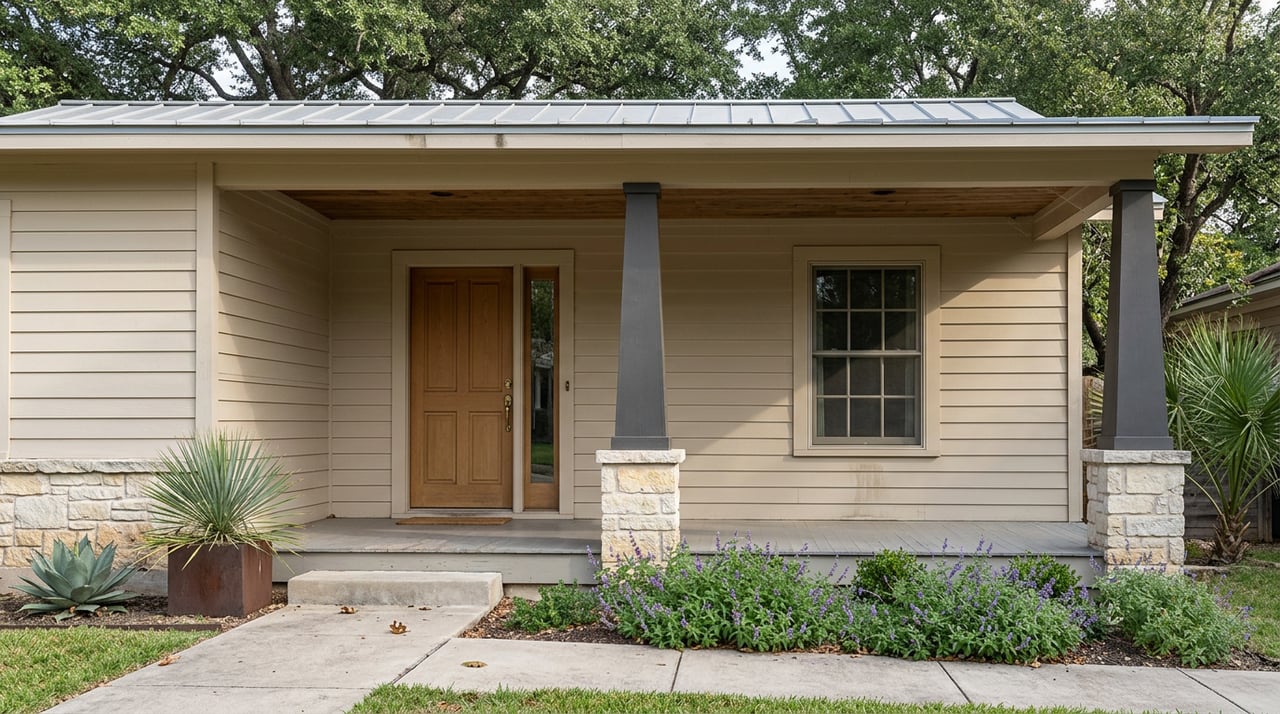
Curb appeal: Austin's mature tree canopy and landscaping norms mean first impressions are shaped by the yard as much as the facade
-
HVAC and systems: Updated mechanicals signal a well-done flip; aging systems become negotiating tools
Flipping houses in Austin rewards investors who prioritize function and quality over cosmetic shortcuts — buyers here have options, and they can tell the difference.
Frequently Asked Questions
How long does a typical house flip take in Austin?
Timeline varies by property and scope, but most well-managed flips in Austin run between three and six months from purchase to close of sale. Permitting timelines in the City of Austin have historically added complexity for structural or addition work, so we factor that in when evaluating any project that requires more than cosmetic renovation.
Is Austin still a good market for house flipping given current prices?
Yes, but with more selectivity required than a few years ago. We still see strong opportunities — especially in transitional neighborhoods and for properties with deferred maintenance that the average buyer won't touch. The key is buying right and staying disciplined on renovation scope.
Do we need to work with a real estate agent when buying a flip property?
Working with an agent who knows Austin's investment landscape gives you a real edge — access to off-market opportunities, accurate ARV analysis, and relationships with sellers who might not list publicly. We work with investors at all stages and can help you evaluate a property before you make an offer.
Reach Out to The Weiss Group
Flipping in Austin is a real opportunity — but only for investors who go in with the right data, the right plan, and the right local partner.
Here at The Weiss Group, we work with investors across Austin's neighborhoods and understand what it takes to find the right property, price a renovation correctly, and sell at the top of the market. When you're ready to explore your next flip, reach out to us at The Weiss Group.
Here at The Weiss Group, we work with investors across Austin's neighborhoods and understand what it takes to find the right property, price a renovation correctly, and sell at the top of the market. When you're ready to explore your next flip, reach out to us at The Weiss Group.